The front shelf
Hips pushed forward, tail tucked, ribs behind you, their weight resting on the front of your pelvis.
The hip is at the end of its range, so ligament holds you there and your glutes do nothing. Your lower back ends up paying for it.
Hip Lab · Carrying · York
You're carrying a load you didn't have last year, for most of the day, and it gets heavier every fortnight. This is ninety minutes on how to hold it.
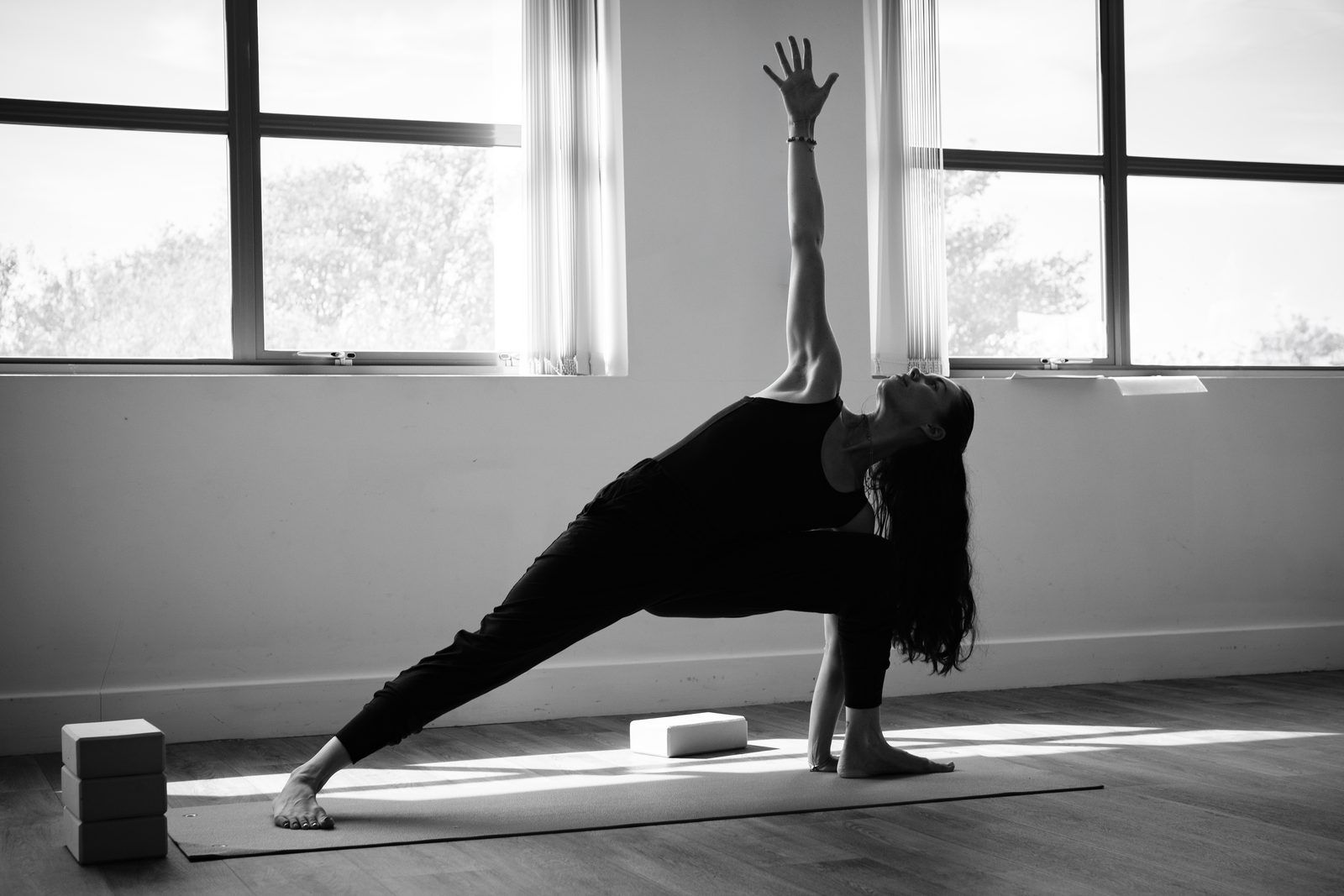
You might recognise
Postnatal advice covers the first six weeks and then stops. You get checked, you get signed off, and after that the carrying is just something you do. Nobody watches how you do it, and it's the single biggest physical demand in your week.
You've probably already tried stretching the bits that ache. It helps for an hour. It doesn't give the hip anything it can hold on to for the other twenty three.
Four positions
The ways of carrying that feel easiest are the ones that cost the least muscle. When you rest your baby on the front of your pelvis, or park them out on one hip, the ligaments around the joint hold you there instead of the muscles. That's efficient, which is exactly why a tired body finds it, and for a few minutes it's completely fine. It's the hours that add up, and it's nearly always more on one side than the other.
Hips pushed forward, tail tucked, ribs behind you, their weight resting on the front of your pelvis.
The hip is at the end of its range, so ligament holds you there and your glutes do nothing. Your lower back ends up paying for it.
Baby on one hip, that hip pushed out, you leaning the other way to balance it.
Your pelvis is being held sideways by ligament rather than by the side of your hip, and it's the same side every time.
Standing still, swaying them to sleep, all your weight parked on one leg with that hip cocked out.
It's the longest you spend in any one position all day, and it's the one nobody has ever pointed out to you.
Lifting them out of the cot, the car seat or off the floor with a rounded back and your arms a long way out in front.
The load is far from your hips, so your back does the lift your hips should be doing. Dozens of times a day.
There's a second half to this that usually gets missed. Feeding puts your hip at ninety degrees for thirty to sixty minutes at a time, several times a day, which shortens the front of the hip in the same way a desk does. When the front of the hip won't lengthen and won't work, your pelvis slides forward in front of your feet to produce the extension the hip can't supply. So the way you stand is partly a tiredness habit and partly what a short, under-strong hip does when it's asked to hold something up.
If you like numbers
A full-term baby weighs around 3.3kg and gains 150 to 200g a week for the first three months. That's an increase of roughly five per cent a week, every week.
3.3 kg
What you started carrying, on the day you gave birth.
10 kg
What you're carrying by the first birthday. Birth weight triples inside twelve months.
2–10%
The load increase sports medicine guidance recommends, and only once you can already manage a couple of extra repetitions for two sessions running.
So the rate is inside what's recommended. What's missing is everything the recommendation depends on. There are no rest days. There's no option to hold the weight where it is for a fortnight while your body catches up. It isn't three sets twice a week, it's several hours a day. And it started the week you gave birth, with no build-up.
Nobody would sign up for that. Every one of us is on it.
What we do about it
A corrected posture is no use to you, because nobody holds one past the car park. What works is having three ways of carrying that all work, and the strength that makes them available when you're tired.
We take a baseline. You hold a weight the way you'd hold your baby, and I tell you what I can see: where your weight sits across your feet, where your ribs are relative to your hips, which side the load lives on. Then a single-leg test for how level your pelvis stays. You'll find out which side is your strong one, and it's usually the opposite of what people expect.
We build the strength that holds the position. The side of the hip that keeps your pelvis level under a load, and the glutes that keep you standing over your feet instead of hanging off the front.
We unload what's been held in one shape. The front of the hip and the flank, which take the brunt of feeding and then pay for it when you stand up.
We work on the carry itself. Three ways of holding your baby, taught as a skill, so the one you default to gets a share of the day instead of all of it.
We re-take the baseline, and you leave with a sixty-second reset you can do while the kettle boils, plus a longer version for the days you get one.
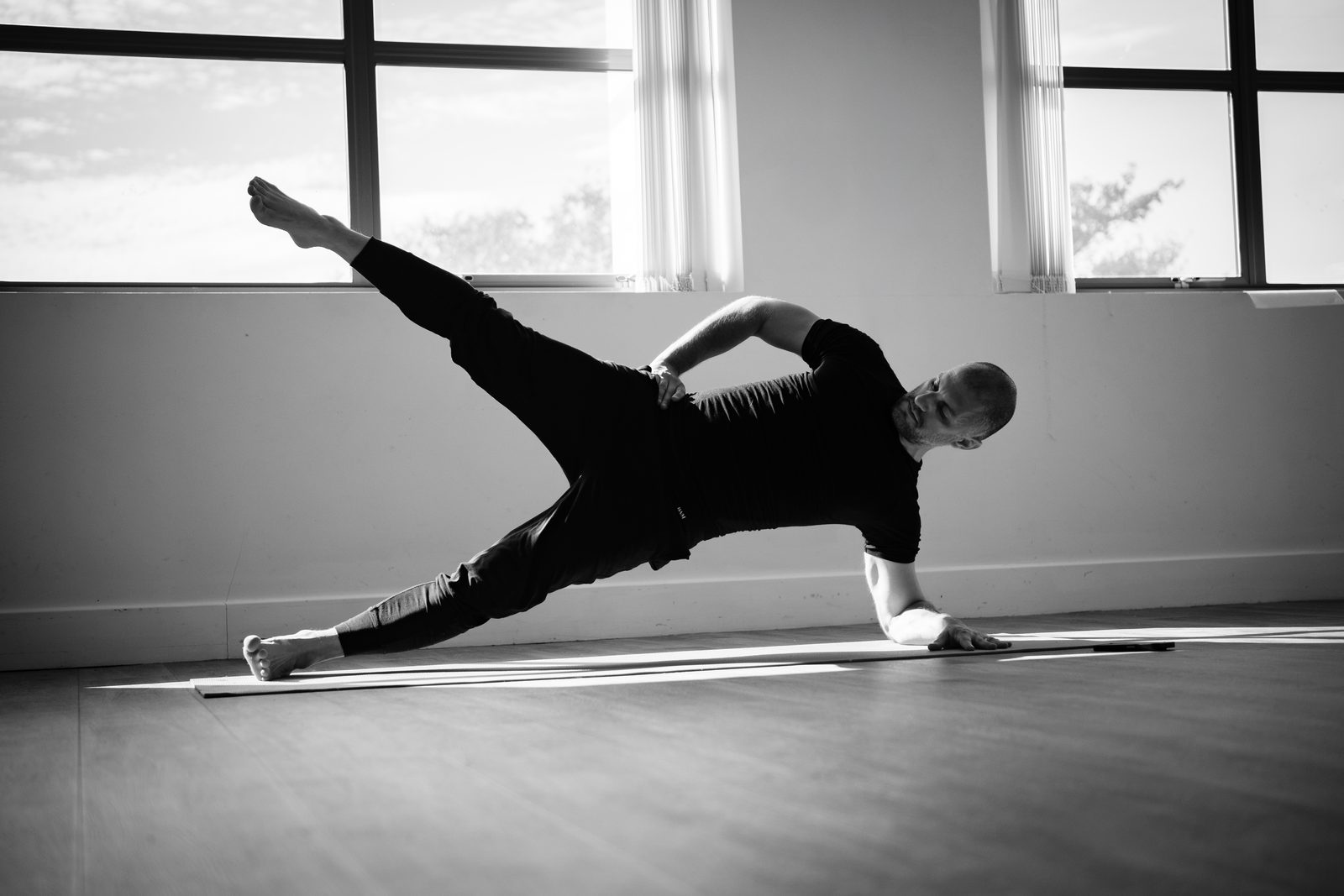
What you're working on
Places are limited, because I'm looking at how each person stands rather than talking at a room. If I can't see you, the session doesn't do what it's for.
Before you book
From six weeks after a vaginal birth, once you've had your GP check. From ten weeks after a caesarean. There are a few questions on the booking form so I know what to adapt, and if you're not there yet I'll tell you straight rather than take your money.
No, and I know that's the harder answer. There's floor work and single-leg balance work in this session that needs both your hands and your full attention, and neither of those survives a room with babies in it. You'd get a worse ninety minutes and so would everyone else.
If cover is the thing standing between you and coming, say so to whoever organised this. A shared sitter for the ninety minutes, or a slot when partners are home, is how other groups have solved it.
That's who this is for. Nothing here needs a base level of fitness and every drill works at half the reps. Say so on the form and I'll keep an eye on you.
Come anyway and do less. That's a normal state in this room rather than a reason to stay home.
Clothes you can move in. Mats, blocks, belts and everything else are provided.
No. See below, because it matters more than anything else on this page.
The honest limit
It won't undo the last however many months, and it isn't pelvic floor care. If you're leaking, or something feels heavy or dragging, or anything hurts across the front or the back of your pelvis, the person you need is a pelvic health physiotherapist. That's worth doing even if you've been told it's normal, and I'll tell you what to look for.
I'd rather send you to the right person than sell you the wrong hour.
Why we built it
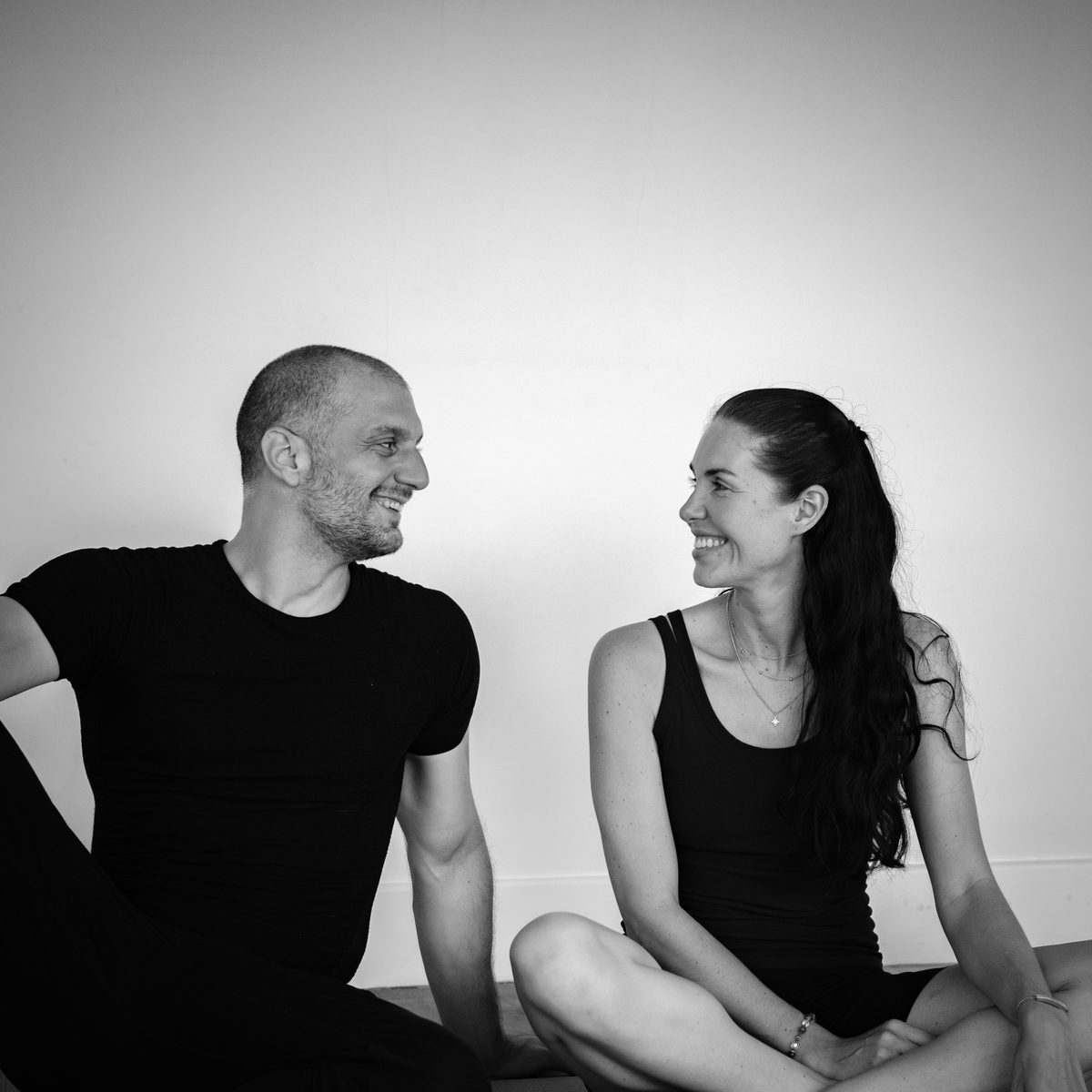
Holly and I have taught and practised yoga and pilates for years. We were in shape, and everyone else thought we were in shape too. Then we had a baby, and the strain of the carrying was so constant that being in shape turned out not to cover it.
We were lucky enough to spot what was happening, and to know that the way a body adapts to carrying can be modified rather than lived with. So we built this workshop for us, and for you.
Book a place
Adults only, so you'll need ninety minutes of cover. Booking goes through Bookwhen and there are a few questions on the form so I know what to adapt.
About
We're a movement, breath and mind education practice run by Markus and Holly, based in Southend-on-Sea and working across Essex, London and online.
Modern living asks more of a body than a body was built for. The sitting alone would do it, and the screens and the noise arrive on top, while everything that used to restore us gets squeezed out of the day. Carrying a baby is the same problem arriving from a different direction: a load the body never trained for, applied for hours, every day.
Clinicians treat injuries. We teach bodies. That means you get told what's happening and why, you get shown what to do about it, and you get to check the difference yourself rather than take our word for it. Everything runs as a Lab, because a lab means baseline, intervene, re-test, and then you go home able to do it without us.
The goal is that you stop needing us.